
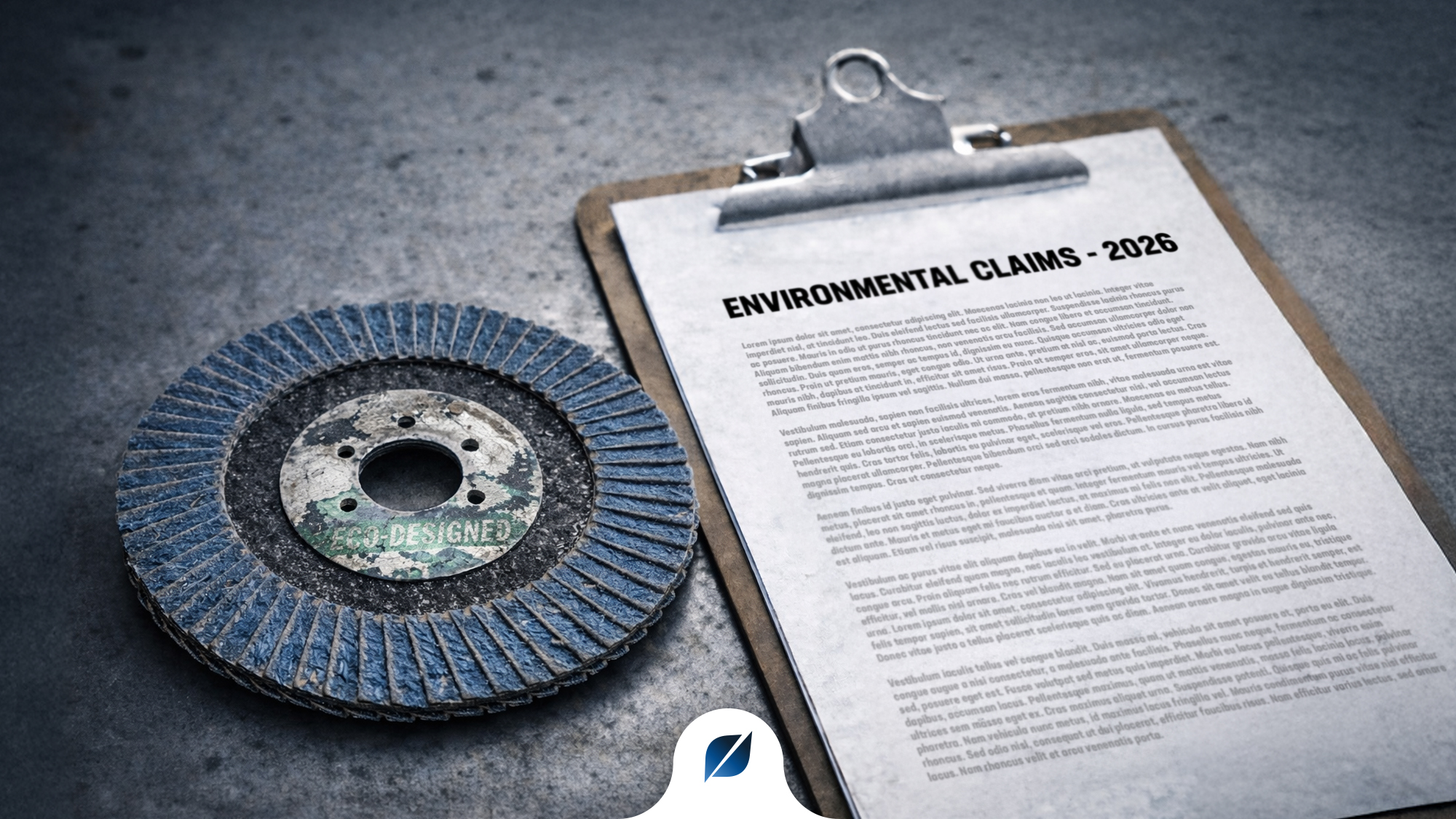
Environmental Claims: 2026 changes the rules
Green Claims in Focus: 2026 Marks a Turning Point for EU & UK Enforcement
Regulatory scrutiny of environmental and sustainability claims is intensifying rapidly across the EU and the UK, with 2026 set to become a defining year for greenwashing enforcement. New rules and expanded enforcement powers will significantly raise expectations for how companies substantiate and communicate environmental performance.
In the EU, the Empowering Consumers for the Green Transition (ECGT) Directive must be transposed by March 2026 and will apply from September 2026. The Directive amends core consumer protection legislation and directly targets vague or generic environmental claims such as “eco-friendly,” “green,” or “climate neutral” unless supported by robust, verifiable evidence or recognised certification schemes. It also restricts:
- Sustainability labels not based on independent certification or public authority schemes
- Claims about entire products or businesses when they relate only to one
aspect - Carbon neutrality claims based solely on offsetting
- Brand or product names that imply environmental benefits without substantiation
Recent enforcement actions across Europe, including significant fines in Italy and Germany and coordinated action against airlines, demonstrate that authorities are already applying stricter standards, particularly around carbon neutrality, circularity and sustainability messaging.
In the UK, regulatory tightening is advancing in parallel. The Competition and Markets Authority (CMA) issued new guidance in January 2026 clarifying that companies are responsible for misleading environmental claims throughout their supply chains – not only those they make directly. With the CMA now able to impose fines of up to 10% of global turnover under the Digital Markets, Competition and Consumers Act, enforcement risks have increased substantially. Meanwhile, the Advertising Standards Authority (ASA) continues to prohibit unqualified or insufficiently substantiated “green” claims across sectors.
What this means for industry
Environmental claims must now be precise, evidence-based and defensible. Companies are expected to strengthen lifecycle assessments, supplier due diligence, contractual controls and internal review processes to ensure that all marketing and product communications withstand regulatory scrutiny.
For SEAM Members, this evolving landscape reinforces the importance of rigorous environmental data management, transparent communication and credible substantiation of sustainability performance. As enforcement intensifies across both jurisdictions, proactive governance and structured reviews of environmental claims during 2026 will be essential to maintain trust, compliance and competitiveness.
Structuring Environmental: the role of the SEAM Carbon Footprint Project
Regulatory pressure does not only concern communication. It concerns methodology.
A supplier unable to provide structured data aligned with European frameworks, including Ecodesign for Sustainable Products Regulation (ESPR) requirements and European Sustainability Reporting Standards (ESRS), becomes a point of vulnerability within its clients’ value chain.
The SEAM Carbon Footprint Project addresses this challenge by providing a sector-specific calculation framework. Developed in alignment with the Life Cycle Analysis work carried out by FEPA, if offers a structured methodology adapted to industry.
In January 2026, a survey sent to label members was conducted to refine the tool, assess sector maturity, and consolidate the basis for the next sector report.
The project is entering a new phase. It supports companies in moving from environmental statements to documented evidence.
Preparing for the Digital Product Passport
From 2027 onwards, the Digital Product Passport (DPP) under the Ecodesign for Sustainable Products Regulation (ESPR), will progressively require structured environmental information to accompany products placed on the EU market.
The DPP will centralize key data including composition, durability and reparability, as well as carbon footprint information.
For the abrasives sector, 2026 is a preparation year. Anticipation allows companies to adapt systems, verify data quality and strengthen internal controls before requirements become fully operational.
Transparency does not create risk.
Lack of preparation does.